

The primer may be one of the least understood controls in the cockpit. And on these cold winter days, with overnight temperatures in San Diego sometimes dipping into the 40’s ☺ that is not a good thing, when you’re trying to start a cantankerous piston engine.
A PRIMER ON PRIMERS
A couple quick primer basics:
-
•Much like a syringe, the primer control fills with fuel when you pull it out, and squirts that vaporized fuel directly into the cylinder intake port or induction system (not into the carburetor, as some believe).
-
•This is different than a carburetor, which proportionally mixes atomized fuel with air.
-
•You’ll find a primer on carbureted piston engines; not on fuel-injected engines. (Another clue in determining whether your engine is carbureted rather than fuel-injected is if you have a Carb Heat control.)
Check the POH of your airplane for tips on how and when to prime your engine. Some manufacturers recommend always priming; some say to only prime if the engine doesn’t first start without a prime. Next, you have to reconcile what the POH says with how a specific engine actually behaves. Engines in similar airplanes may require slightly different starting procedures, due to different compressions and mag timing. Try to learn the best way to start the engine on any airplane you’re going to fly. Many times this advice can be obtained by asking the owner or another pilot familiar with that airplane.
Here’s what the POH for the Cessna 172N says regarding priming (Amplified Procedures under Normal Procedures section):
In warm temperatures, one or two strokes of the primer should be sufficient. In cold weather, up to six strokes of the primer may be necessary. If the engine is warm, no priming will be required. In extremely cold temperatures, it may be necessary to continue priming while cranking the engine. Weak intermittent firing following by puffs of black smoke from the exhaust stack indicates over-priming or flooding. If the engine is under-primed (most likely in cold weather with a cold engine) it will not fire at all, and additional priming will be necessary.

There are additional tips related to priming in the Cold Weather Operation section, including continuing to prime after engine start until it is running smoothly. Read your POH.
Here’s what the Pilot’s Handbook of Aeronautical Knowledge has to say about fuel primers (page 6-25):
The fuel primer is used to draw fuel from the tanks to vaporize fuel directly into the cylinders prior to starting the engine. During cold weather, when engines are difficult to start, the fuel primer helps because there is not enough heat available to vaporize the fuel in the carburetor. It is important to lock the primer in place when it is not in use. If the knob is free to move, it may vibrate out during flight and can cause an excessively rich mixture. To avoid over-priming, read the priming instructions for the aircraft.
After the flight, if you try to shut down the engine by pulling the mixture control to idle cut-off, but the engine continues to chug and chortle, check the primer control to be sure it’s locked. If it’s unlocked and protruding even just a fraction of an inch, well, that’s going to port enough raw fuel directly into the cylinders to keep the engine firing.
LESS IS MORE
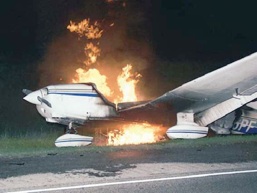


My rule is that on those airplanes with an accelerator pump on the carburetor, (essentially all Lycoming’s over 118-HP, with any model of Marvel carb other than the MA-3A), you only pump the throttle if it’s necessary to get the engine started, and then only while you’re cranking --- not before cranking. Primarily use the primer to start, not the throttle. If you smell fuel, or see fuel inside or under the cowling, well… you’ve over-primed.
PRIME, THEN START
Priming should be the very last thing you do before turning the key. If you prime three times and then:
-
•Search around for the key;
-
•Look around for people near the airplane;
-
•Yell “CLEAR!!!” out the window;
-
•Adjust your seat;
-
•Fasten your seatbelt;
-
•Then turn the key….
Well, that’s about the same as not priming at all. The fuel vapor you shot into the intake 30-seconds ago has now evaporated. Do all the stuff in the above list, then:
-
•Prime the engine;
-
•Turn the key.
WHEN NOT TO PRIME
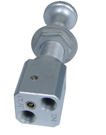
The picture of the pristine primer knob at the top of this article is from my Cub. In starting the engine on Big Al over 500 times, I don’t think I’ve primed it more than once or twice, and that’s been on a chilly early morning flight when the airplane has been outside on the ramp overnight. Otherwise that Continental O-200 generally fires on the first try every time with no priming required.
One last thought. While you’re going through all this priming and starting of cold engines in cold weather, be careful to not overheat the starter. There is usually a limit of how long (10 or 20 seconds) you can crank the starter before waiting for it to cool down. And if you don’t burn up the starter, you’ll probably deplete the battery which also doesn’t do well in cold weather. But that’s a topic for another time.
# # #
For more on how these carbs work, read this PDF:. Marvel-Schebler Carburetors.pdf
© Garry Wing 2014





