



There’s an age-old debate about which is better to train in; a high-wing Cessna 172 or a low-wing Piper Cherokee. Piper discontinued the SuperCub in the early ‘90’s, and the high-wing Tri-Pacer and Colt decades before that. Since that time they’ve competed with Cessna in the ASEL arena with low-wing design aircraft.
Here’s the bottom line: neither is better than the other, but they do offer distinct differences and features. As a Private Pilot, or even as a Student that has been checked out in each, you should be able to easily migrate between 4-seater Cessna and Piper aircraft with little problem. I use the analogy of renting a car. You might be accustomed to driving a Chevy Cruze; but how hard is it to transition to a Ford Fusion? They’re similar sized cars; you just need to figure out where the lights are and how the radio, door locks, window switches, cup holders, etc. work. If you can drive a Chevy, you can likely drive a Ford.
The difference between similar model Cessna and Piper aircraft is a matter of preference. If I have a choice between two similar aircraft, side-by-side, the matter of whether the wing is on top (Cessna) or on the bottom (Piper) is one of the last things I would consider (unless I had a couple passengers, we were making multiple stops, I had to refuel the plane myself, etc., then there are some factors to consider, as detailed below). In my mind, these are the configuration and equipment features I would actually consider between two airplanes:
-
✓If one has active traffic (and/or ADS-B), I would opt for that airplane.
-
✓If one has long-range tanks, and/or a higher useable load, or higher cruise speed, I would opt for that airplane.
-
✓If one has a (larger screen) GPS, and the database is up-to-date, I would opt for that airplane.
-
✓I would consider more highly the airplane that has a lower-time engine/overhaul and has received better maintenance.
-
✓If one airplane has DME, an auto-pilot, an HSI (or at least a heading bug on the HI), I would opt for that airplane.
Those are some of the mental calculations I run through if I have a choice between two or more airplanes. Here’s a comparison of factors between High & Low wing airplanes; you can decide which of these are important to you in the grand scheme of things. If you think of any other decisive attributes, drop me a line and I’ll add them to the list.
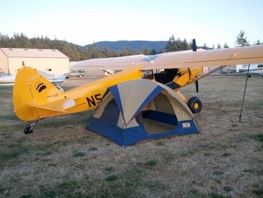
High wing - Cessna 172

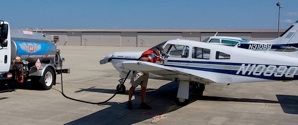
Low wing - Piper Cherokee
Pros: Easier to re-fuel. Easier to fly in ground effect (better for short field t/o). Manual flaps (retract more quickly). Design of most PA-28 engine compartments negates the need for Carb Heat. You can see a loose or missing fuel cap or leaking tank. Less drag; no wing strut, gear is attached to wing, no gear struts.
Cons: Harder to get into (one door, climb on wing). Requires a fuel pump (fuel below engine); requires switching fuel tanks. Can’t see landing gear. Hard to see airplanes below you. Harder to sump fuel tanks and check tires and brakes.
MAKING THE TRANSITION
Some airplanes call the rotating beacon a ‘fin’ light; some say ‘beacon’, some say ‘anti-collision’. Not all airplanes have the same switches and labels. Get used to it and get over it. This is part of what makes them different. Figure out what switch goes with what light, etc. during your pre-flight and de-mystify that part of the checkout before engine start.
When you taxi a new airplane for the first time, your sight picture will be different. In low wing aircraft, you climb on the wing then step down to get into your seat. On high wing aircraft, you generally use a step on the wheel strut to climb up into your seat. It’s going to look different taxing, taking off, landing, and even in straight and level flight (or in any flight regime, for that matter). Again, just adapt to the difference and embrace it. Frankly, it gets a little old to keep hearing a transitioning pilot compare/contrast the difference between airplanes. Yes; they are all different, but that’s part of the fun flying different airplanes. Aviating would get boring pretty quickly if everything were exactly the same every time you flew.






