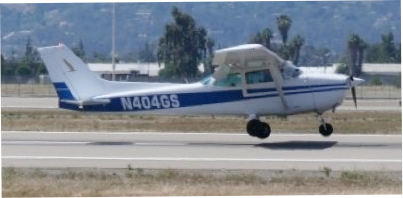

There’s at least two times each flight that you’re flying near the edge of the performance envelope ---
-
•On takeoff, you have full power at a steep angle-of-attack.
-
•When landing, you're engine idle, at Minimum Controllable Airspeed (MCA), just before you stall the airplane mere inches over the runway.
A P-51 Mustang will climb from sea level at about 3,600 FPM. Thankfully, your Skyhawk or Archer climbs at only a fraction of that rate. A lot can happen, rather quickly, when you're climbing a mile every 90-seconds! You get a little more time to sort things out when it's all happening at a slower pace, but it still requires vigilance and good judgment to fly safely near the edges of your own airplane's envelope.
GETTING YOUR ATTENTION
While the objectives of takeoffs and landings are diametrically opposed, there are two things they have in common. As mentioned above, they each put you near the lower edge of the performance envelope. And, they both occur close to the ground (at least the beginning of every takeoff and the end of every landing). That's a vulnerable place to be flying an airplane near its performance envelope. Here's a few issues that could occur:
On takeoff -
-
• Poor directional control could take you off the runway
-
• Engine not developing full power could be a problem
-
• You could hit an obstacle or terrain if you don't watch where you're going
-
• You could hit another airplane (or they could hit you) if you don't watch where you're going
-
• A shift of cargo or payload imbalance could adversely affect handling
-
• You could fly into Restricted or unauthorized Airspace (B, C, TFR)
-
• If you pitch up too much, you could stall close to the ground
-
• If you're not coordinated (ball centered) when you stall, you could spin
On landing -
-
• Many of the items above, plus:
-
• Engine not developing minimum power at idle could be a problem
-
• You could roundout / flare / stall too high and drop it in
-
• You could ding the prop if you land on the nosewheel first
-
• You could land a retract gear up if you don't do GUMPS at least three times
-
• You could land at the wrong airport if you're not paying attention (hey; it's happened!)
HOW SLOW CAN YOU GO?
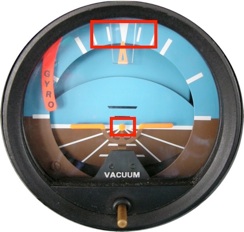
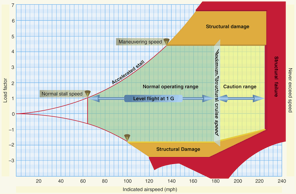
One of the problems that creates Loss of Control (LOC) accidents is many pilots don’t spend a lot of time flying near the edges of their airplane’s performance envelope; particularly slow flight with and without power. I’ve found this with some instrument-rated pilots and those who fly fast, high-performance airplanes.
A PLAN OF ACTION
So, how to mitigate the risks outlined above? Well, here are a couple suggestions:
-
• Maintain a 'sterile cockpit' below 1,500' AGL. That's basically approaching the traffic pattern (landing) or after reaching TPA on climb out (takeoff). The airlines enforce a sterile cockpit rule below 10,000'.
-
• Know the performance capabilities of your airplane. When you got checked out in it, or the first time you flew it, you should have already practiced Slow Flight/MCA, Stalls, Steep Turns, descents (with and without power and flaps), and reviewed the essential Emergency Procedures in the POH. You must also calculate Weight & Balance for various passenger / cargo / fuel scenarios.
-
• Spend some time practicing slow flight, with and without power and flaps/gear down. Get used to the subtle clues your airplane is giving you as you push through the edges of the envelope. Practice getting into --- and out of --- slow flight /MCA. This is a common part of any Mountain Flying training program you might take, as you spend a lot of time flying near the edge of the envelope getting into, out of, and around mountains. Conversely, one of the most difficult things intermediate students wrestle with is when I ask them to fly straight & level, with full power. Anybody can chug along S/L at 2,200-RPM, but try it with full power, without climbing, and while staying coordinated for more than a couple minutes.If this doesn’t look familiar to you, you should probably get some performance training from a qualified instructor...
-
• Keep your head on a swivel whenever you’re below 1,500’ AGL. That means: eyes outside 80% of the time; peek inside, LOOK outside. The Navy teaches a 16:4 ratio: 16-seconds looking outside, followed by 4-seconds inside. You do this not only to avoid hitting other airplanes but for terrain and obstacle clearance.
-
• Use the radio (ATC at towered or CTAF at non-towered), but listen more than you talk, because other people probably aren't listening to you anyway.
-
• If something doesn't look right landing, Go Around! On takeoff, if something doesn't look right by the time you’re half-way down the runway, Abort!
-
• Try to standardize the systems and procedures you use when you fly. This means, always use a checklist for each phase of flight, fly a stabilized approach, climb out at Vy (Vx, if obstacles), fly coordinated unless you're meaning to slip (can't think why you'd ever want to skid...?), fly a normal pattern arriving and departing from non-towered airports and be at TPA before you enter the pattern at any airport.
-
• Question ATC (or another pilot) if something doesn't look or feel right. I hate to be the policeman of the air, but a couple weeks ago I did reprimand another pilot that announced he was going to do a “straight-in from 4-miles out” at French Valley, while I was downwind about to turn base in a slow-moving Cub. He said he couldn't see me (in fact he still didn't see me when I was on the runway). I said, “Dude; that's why you want to fly a standard pattern at a non-towered airport; there are also people up here without radios in their airplane.” I don't want to get run over by a low-wing Archer that descends on top of me in my high-wing Cub. (It was a Plus One member flying Archer 33081 out of Gillespie, so even though the club makes you do annual Flight Reviews, there are still chuckleheads out there doing bone-headed things in airplanes.)
-
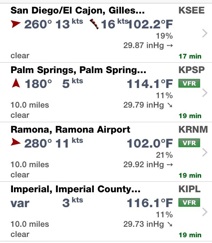
• Understand everything that’s in the Performance section of your airplane’s POH, particularly the effect of altitude and density altitude on takeoff and climb performance and the effect of a tailwind on takeoff or landing. Don’t pick the hottest day of the year to figure out how poorly your airplane performs with full fuel and a full payload.
© Garry Wing 2015