

Newbies to aviation often ask whether they should pursue Part 61 or 141 training --- or even, what in the world is the difference?
Here's the gist of this:
-
Part 61 - Standalone flight instructors, flying clubs and flight schools.
-
-
Part 141 - Some flight schools.
WHAT; YOU NEED TO KNOW MORE?
OK, here's a little more detail. Part 141 flight schools voluntarily apply for that status. The school must meet stringent requirements for personnel, equipment, maintenance, and facilities (such as private de-briefing rooms, an examination room with a door, all airplanes located at same place, etc.) There is a lot of paperwork and oversight involved to become and remain a Part 141 school. As such, graduates of these schools are allowed to meet experience requirements with (somewhat) less flight time, although that is not a certainty.
Why would a school want to become a Part 141 (or Part 142: specializing in the use of flight simulation), and perhaps even hire their own DPEs (Designated Pilot Examiners)? Simple; the bigger schools and universities often operate on a contract basis; that is, they train a student from "zero-time" to Commercial / Multi-Engine for, say $48,000, over the course of 10 months. If they're Part 141 (and have on-staff DPEs), they can churn 'em out somewhat more quickly, dropping even more profit to the bottom line.
WHAT'S IN IT FOR ME, YOU ASK?
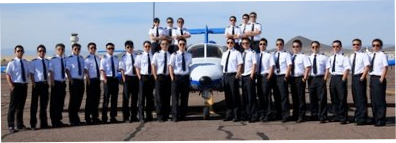
Well, as the student, not much really. Part 141 benefits the school more than it does the student. You still have to train to the same PTS as everyone else and take the same exact knowledge (written) test and check ride. But you are now officially a "cog-in-the-wheel" of this Part 141 apparatus: you may only move on to the next lesson after you've finished this lesson, and you can't complete any lessons out of order (you may be grounded for several days waiting for a nice clear VFR night so you can go do 5 landings after sunset). You must attend formal (live / local) ground school classes. (And you may have to wear a white shirt and epaulets.)
The overwhelming majority of flying schools in the US are Part 61; they offer excellent training and meet or exceed the standards required of Part 141 schools. Flight instructors working under Part 61 meet the same requirements for certification and renewal as those flight instructors employed by Part 141 schools. Many instructors at Part 141 schools are graduates of that school's CFI program (in other words, your flight instructor may have been a student pilot at that school just as you are, a mere 9-12 months ago...). Imagine being taught how to drive by a 17-year old that has had their driver's license for less than a year, and you'll get the picture.
BEEN THERE; DONE THAT.

A BETTER IDEA
If you're about to take the bait on Part 141 because you read somewhere you can get your Private or Instrument rating in fewer hours, I have a better plan. To reduce the biggest cost of flight training: the amount of time you spend in the airplane with the engine running (with a flight instructor sitting beside you); you should:
-
•Know where you are in your training; what the next flight lesson consists of.
-
•Fly as often as possible. Intensive all-day/every-day accelerated training is better than a series of random weekend flight lessons spread over a year or more.
-
•Read material and watch video related to that lesson.
-
•Come up with questions or concerns you can discuss with your instructor in the pre-brief for that lesson.
-
•Be sure to thoroughly de-brief after each lesson, and make sure your questions have been answered.
-
•Record video/audio of each flight lesson and review it when you get home. You'd be surprised how much goes over your head when you're in the airplane; it's almost like getting an extra lesson for "free" when you have a video to review of each flight.
DIRTY LITTLE SECRETS
Here's a couple facts you may not have considered regarding Private and Instrument flight training.
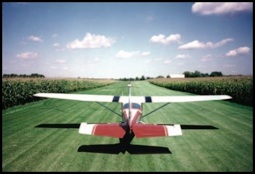
In the Jeppesen Part 141 syllabus, you spend more solo time on cross-country flights, but less time locally, working on maneuvers. This is exactly backwards from what most Private Pilot students need. Virtually everyone breezes through the cross-country briefing in the oral portion of the check ride --- and you generally only fly the first leg or two of it on the actual check ride --- but many students struggle (and a few choke) on stall recovery, steep turns and landings (especially crosswind); the very things you would have practiced 3.5 fewer hours under Part 141 than 61.
Now, if you were enrolled at a major university (Embry-Riddle, UND, WMU, etc.) in their career program, then yes, of course you should pursue Part 141. You're in school all day, every day and Part 141 is ideal for career oriented students. If you're pursuing training funded under the VA bill, then you must train Part 141 (the VA won't fund Part 61 training). If you're training for a Commercial Pilot License (CPL) and you don't have 250-hours PIC, you might consider pursuing Part 141 (only 190-hours required).
DO THE MATH
Here’s a side by side comparison of some of the similarities and differences between Private Pilot training Part 61 vs. Part 141.

© Garry Wing 2015